
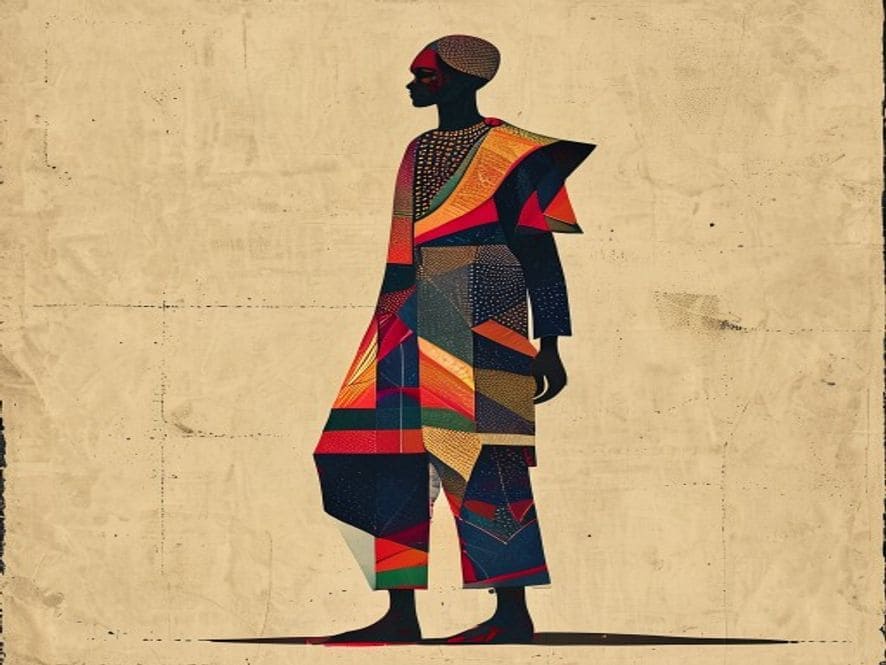
 Fashion
Bogolanfini
Bogolanfini, often known as Malian mud cloth, is a traditional cotton fabric meticulously hand-dyed with fermented mud and plant dyes, primarily by the Bamana people of Mali. Renowned for its distinctive earthy tones and intricate symbolic patterns, it is a significant cultural art form.
Bogolanfini is a deeply rooted artistic tradition originating from Mali, West Africa, particularly among the Bamana, Bozo, Dogon, and Malinke ethnic groups. The term ‘bogolanfini’ translates roughly to ‘mud cloth’ (from Bamana ‘bògòlan’ meaning ‘earth/mud’ and ‘fini’ meaning ‘cloth’). This unique textile is created through a complex, time-consuming process where hand-spun and hand-woven cotton fabric is first soaked in a solution of pounded leaves and bark to imbue it with a yellow hue, then meticulously painted with various fermented muds, which react with the treated cloth to create permanent, dark patterns. Areas not meant to be dyed are protected or later bleached, resulting in a distinct negative space design.
Cultural Significance
Traditionally, Bogolanfini held profound social and spiritual significance. Historically, it was worn by hunters as camouflage and for its perceived protective qualities, believed to absorb dangerous forces released during hunting. It also played a crucial role in women’s rites of passage, such as after initiation, during childbirth, and following female genital mutilation, offering protection and signifying their new status. Each pattern and motif on Bogolanfini is imbued with specific meanings, often conveying proverbs, historical events, spiritual beliefs, or social commentary, with the knowledge and techniques passed down through generations, primarily within women’s collectives.
The creation of Bogolanfini is more than just an artistic endeavor; it is a ritualistic process that connects the maker to the earth and their ancestors. The patterns serve as a visual language, offering insights into the Bamana cosmology and worldview. The deliberate imperfections within the design are often seen as a reflection of life’s inherent complexities, contributing to the cloth’s unique character and spiritual depth.
Legacy and Contemporary Influence
In the late 20th century, Bogolanfini transitioned from primarily local ritualistic and utilitarian wear to a globally recognized art form and fashion statement. Malian artists and designers, such as Chris Seydou, were instrumental in popularizing mud cloth on international runways and in contemporary art scenes. Today, Bogolanfini patterns adorn a wide range of products, from high fashion garments and accessories to interior decor and fine art pieces, celebrated for its aesthetic beauty and cultural authenticity. Its enduring appeal underscores its status not just as a fabric, but as a powerful symbol of Malian heritage and African artistic innovation, inspiring designers and artists worldwide while maintaining its connection to traditional practices.