
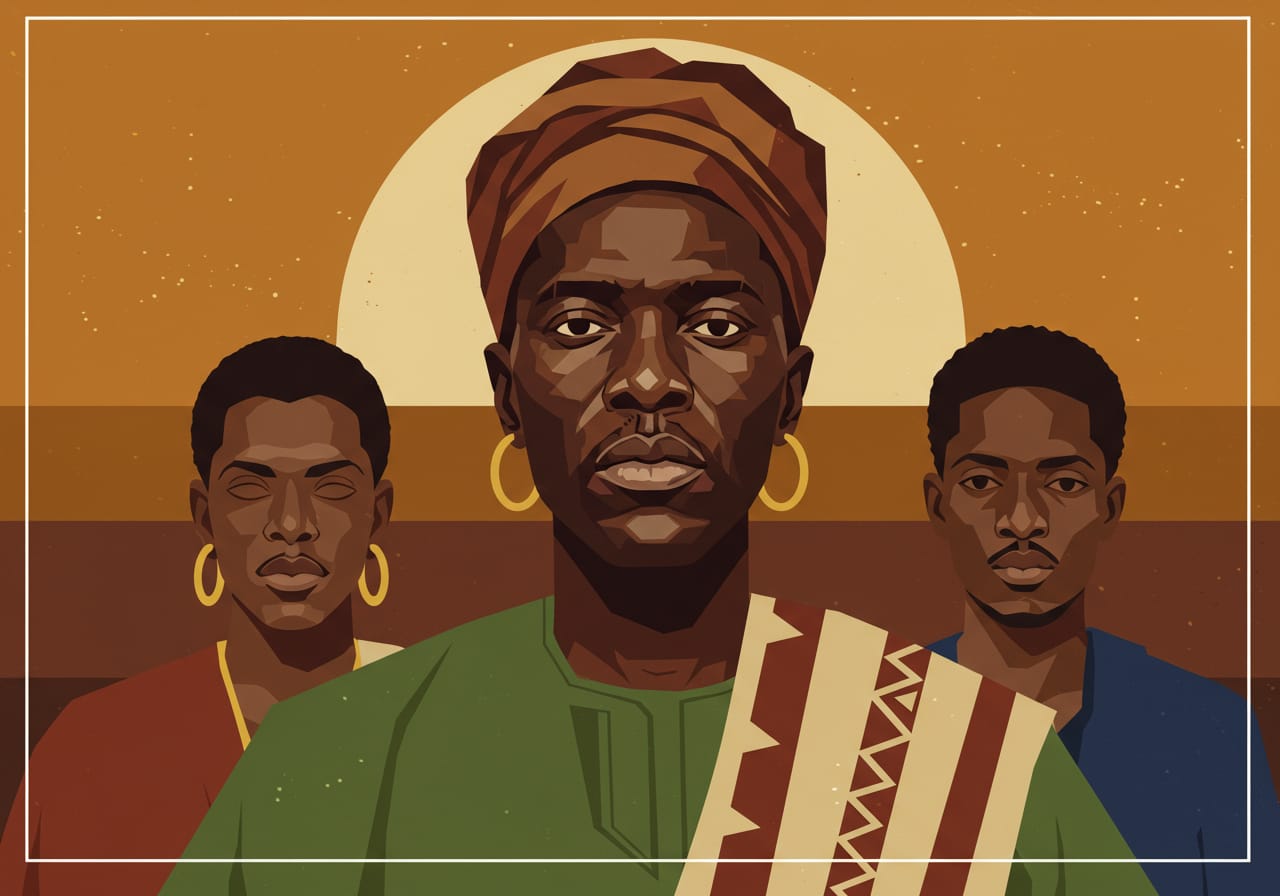
 Person
Kwame Nkrumah
Kwame Nkrumah was a pivotal Ghanaian anti-colonial revolutionary, political theorist, and the first Prime Minister and President of Ghana, leading the nation to independence from British rule in 1957. He was a staunch advocate for Pan-Africanism and a towering figure in the 20th-century decolonization movement.
Kwame Nkrumah was born in Nkroful, Gold Coast (now Ghana) in 1909. Educated in the Gold Coast, the United States, and the United Kingdom, he emerged as a leading voice for African independence. Upon his return to the Gold Coast, he founded the Convention People’s Party (CPP) and rapidly mobilised popular support for self-governance. His tireless efforts culminated in Ghana becoming the first sub-Saharan African nation to achieve independence in March 1957, a moment that resonated deeply across the continent and inspired countless liberation movements.
Cultural Significance
Nkrumah’s leadership transcended mere political liberation; he championed a distinct African identity and philosophy. His concept of “Nkrumaism” advocated for African socialism, non-alignment during the Cold War, and the urgent need for a united Africa. He believed that the independence of Ghana was meaningless without the total liberation of the African continent, a sentiment that fueled his support for anti-colonial struggles elsewhere. His vision profoundly influenced the cultural and intellectual landscape of post-colonial Africa, encouraging a re-evaluation of African history, art, and societal structures.
Legacy and Related Works
Nkrumah’s legacy is immense and multifaceted. He was a founding member of the Organisation of African Unity (OAU), the precursor to the African Union, and tirelessly worked towards a unified African state. His writings, such as “Africa Must Unite,” “Neo-Colonialism, the Last Stage of Imperialism,” and “Consciencism: Philosophy and Ideology for Decolonisation and Development,” remain foundational texts for understanding African political thought and Pan-African ideology. Nkrumah’s commitment to industrialisation, education, and infrastructure development left an indelible mark on Ghana, and his call for African unity continues to inspire activists, scholars, and leaders today.