
 Place
PlaceMarrakech
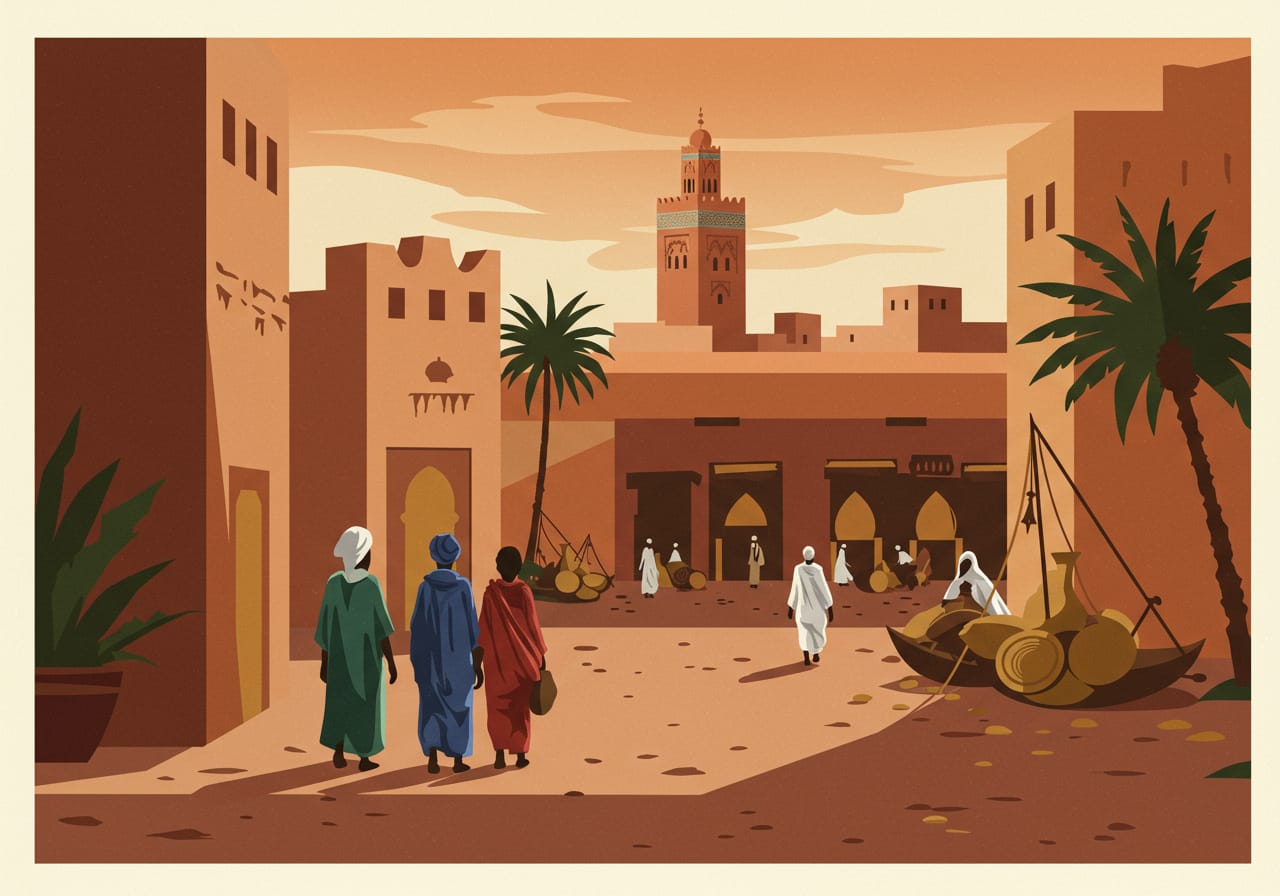
Marrakech, often called the ‘Red City’ due to its distinctive sandstone buildings, is a major city in Morocco and a vibrant cultural hub in North Africa. It is renowned for its rich history, bustling souks, exquisite gardens, and the iconic Jemaa el-Fnaa square.
Marrakech, one of Morocco’s four imperial cities, is situated at the foot of the Atlas Mountains. Founded in the 11th century by the Almoravids, it quickly grew into a significant political, economic, and cultural center for the Maghreb and sub-Saharan Africa. The city’s medina, a UNESCO World Heritage site, is a labyrinth of narrow alleyways, vibrant souks, and historic riads, reflecting centuries of trade and cultural exchange.
Cultural Significance
Marrakech is a living testament to Moroccan artistry and tradition. Its cultural heart beats in Jemaa el-Fnaa, a bustling square where storytellers, musicians, snake charmers, and acrobats gather, creating an electrifying atmosphere that embodies the spirit of public performance and oral heritage. The city’s souks are famous for their traditional crafts, including leather goods, textiles, pottery, spices, and intricate metalwork, showcasing the enduring skill of local artisans. Marrakech has also long been a muse for artists, writers, and designers from around the world, drawn to its unique blend of ancient charm and cosmopolitan flair.
Legacy and Related Works
The legacy of Marrakech is embedded in its preserved architectural wonders, such as the Koutoubia Mosque, Bahia Palace, and the Ben Youssef Madrasa, which stand as monuments to its grand imperial past. Its enduring appeal as a center for tourism continues to connect visitors with authentic Moroccan culture, cuisine, and hospitality. The city has influenced countless works of art, literature, and film, often serving as a captivating backdrop. Marrakech continues to evolve while steadfastly preserving its deep cultural roots, ensuring its place as a dynamic and essential city in the African cultural landscape.