
 Concept
Ojude Oba Festival
The Ojude Oba festival is an annual cultural celebration held in Ijebu-Ode, Ogun State, Nigeria, by the Ijebu people. It is a vibrant spectacle of tradition, horsemanship, and community, primarily observed by Muslims three days after Eid al-Adha.
The Ojude Oba festival, which translates to “The King’s Forecourt,” is a resplendent annual tradition deeply embedded in the cultural fabric of the Ijebu people of Ogun State, Nigeria. Celebrated in Ijebu-Ode, the festival takes place annually, typically three days after the Muslim Eid al-Adha (Ileya festival), and serves as a profound expression of communal identity and allegiance to the Awujale, the paramount ruler of Ijebuland.
Cultural Significance
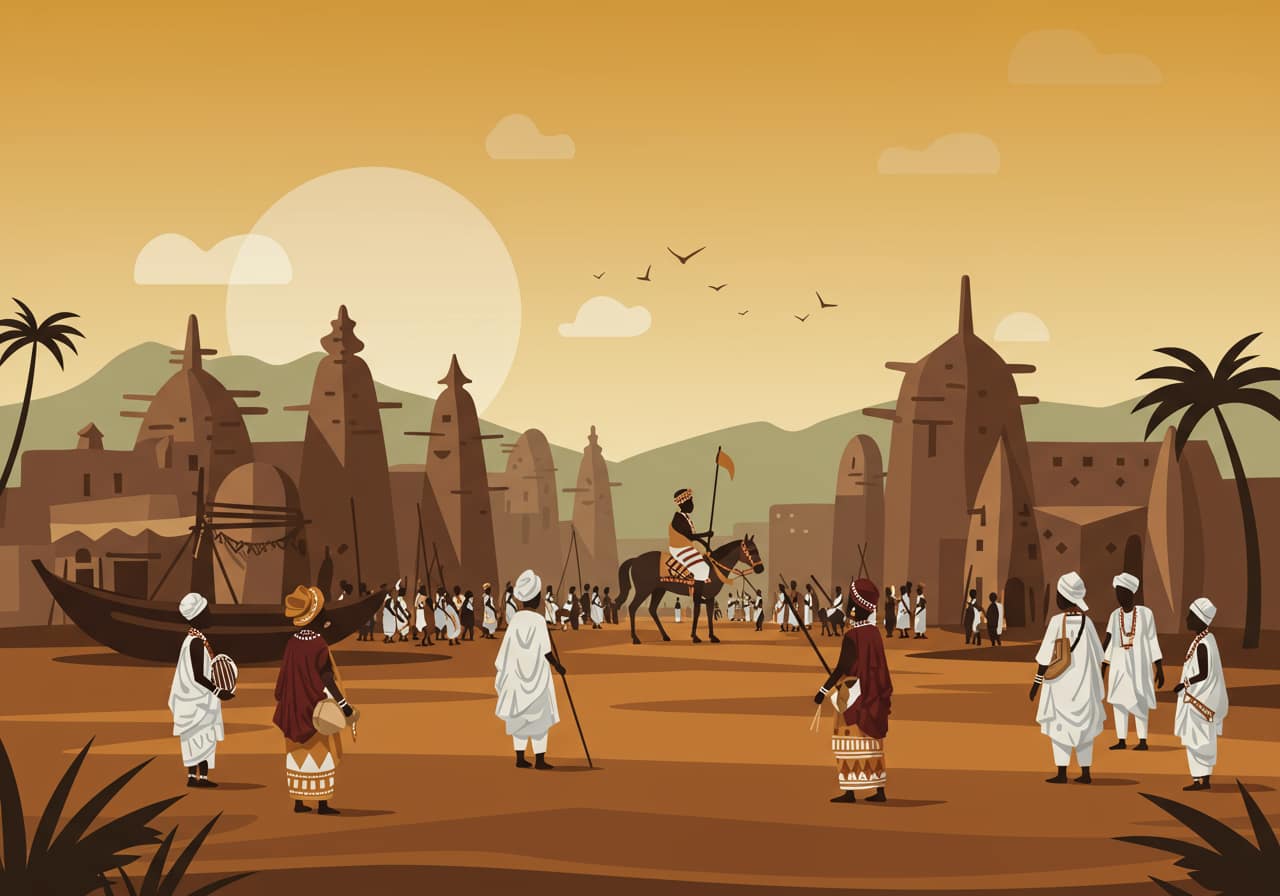
At its heart, the Ojude Oba festival is a magnificent display of Ijebu heritage, bringing together various age-grade groups (regberegbe) and traditional chiefs. Participants, adorned in exquisitely tailored traditional attire, parade through the town to pay homage to the Awujale in his palace forecourt. A highlight of the festival is the thrilling display of horsemanship by various Balogun (war chiefs) families, who gallop on decorated horses, re-enacting historical military prowess. Beyond the spectacle, it fosters unity, reaffirms social structures, and provides a platform for both local and diasporan Ijebus to reconnect with their roots and celebrate their unique blend of Islamic faith and ancient Yoruba customs.
Legacy and Related Works
The Ojude Oba festival has transcended its local origins to become a significant cultural event on Nigeria’s national calendar, attracting tourists, researchers, and media from around the world. Its consistent celebration for over a century underscores its resilience and adaptability in preserving traditional values amidst modernization. The festival is frequently documented in national media and academic works exploring Yoruba culture and Nigerian festivals, serving as a vital reference point for understanding indigenous traditions. It shares thematic resonance with other grand traditional events across Nigeria, such as the Durbar festival in Northern Nigeria, which also features elaborate equestrian displays and communal homage to traditional rulers, showcasing the rich tapestry of African cultural celebrations.