
 Food & Drink
Thieboudienne
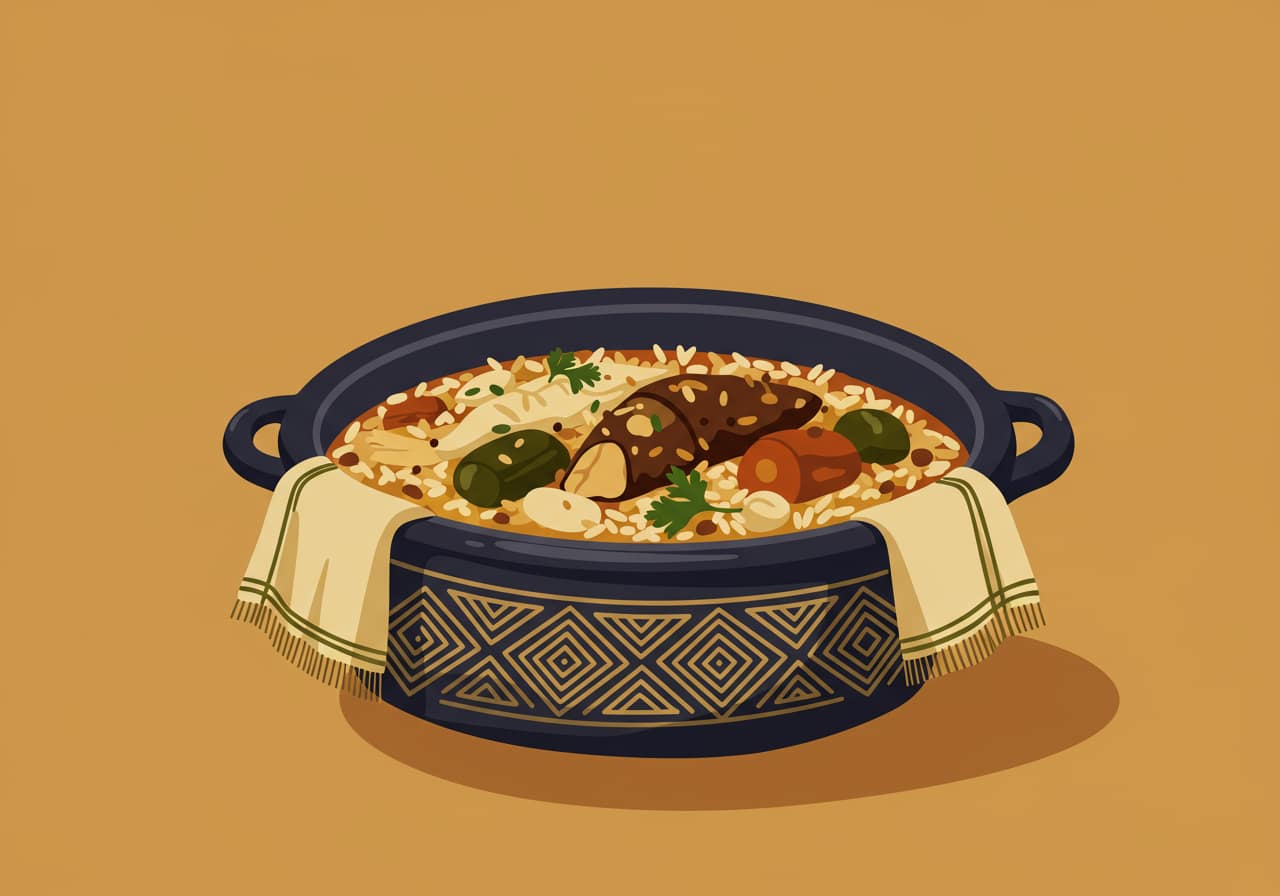
Thieboudienne, the national dish of Senegal, is a rich and aromatic one-pot meal of fish, rice, and vegetables that serves as a cornerstone of West African culinary identity.
Thieboudienne, also known as Ceebu Jën in Wolof, is the national dish of Senegal and a culinary masterpiece of West African heritage. Originating in the coastal city of Saint-Louis during the 19th century, the dish is traditionally prepared with firm white fish, broken rice, tomato paste, and an assortment of vegetables such as carrots, cassava, eggplant, and cabbage. The preparation involves a complex layering of flavors, often including ‘yet’ (fermented mollusk) and ‘guédj’ (dried salted fish) to provide a deep, umami base.
Cultural Significance
Beyond its status as a meal, Thieboudienne is a profound symbol of ‘Teranga’—the Senegalese value of hospitality and communal sharing. It is traditionally served in a large communal tray, with the fish and vegetables placed in the center and the rice surrounding them, inviting family and guests to eat together. This method of service reinforces social bonds and the egalitarian spirit of the community.
In 2021, the dish was officially recognized by UNESCO as part of the Intangible Cultural Heritage of Humanity. This designation honors the traditional knowledge passed down through generations of Senegalese women who have refined the technique of ‘thei-bou-diene’ (literally ‘rice with fish’). It stands as a testament to the preservation of local agricultural practices and indigenous culinary techniques.
Legacy and Related Works
Thieboudienne is widely regarded as the ancestor of Jollof rice, having influenced rice-based dishes across the West African coast as it spread through trade and migration. While the ‘Ceebu Jën Penda Mbaye’ is the classic red version using tomato paste, variations such as ‘Ceebu Jën Bu Weex’ (white rice) also exist, utilizing different aromatics and marinades. Its legacy continues to grow through the global Senegalese diaspora, where it remains a vibrant link to ancestral roots and a staple at cultural celebrations.
- Saint-Louis (Ndar) culinary history
- UNESCO Intangible Cultural Heritage status
- The concept of Teranga
- Regional influence on West African rice traditions