
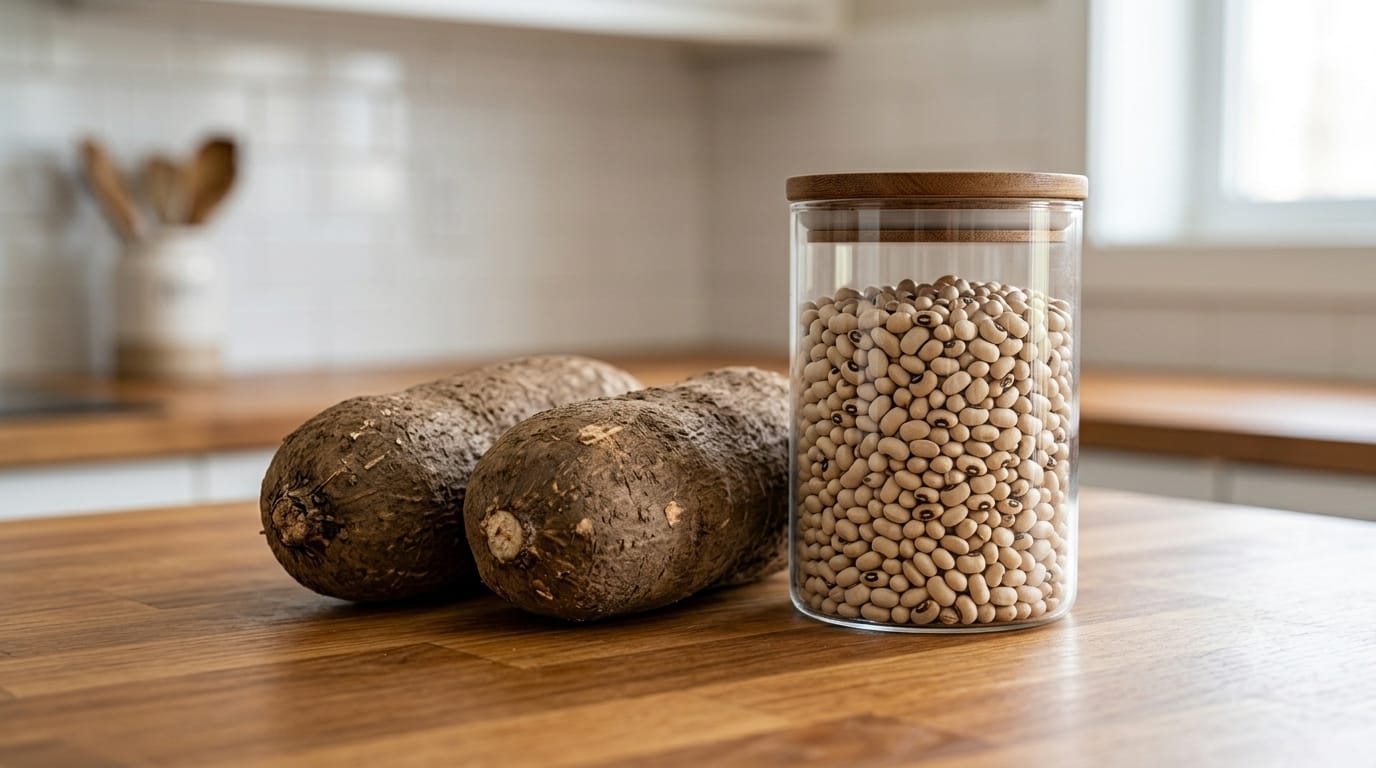
Being stuck in an island for a week with only yam and cowpeas (beans) as your main staples might sound restrictive, but it is actually a fantastic canvas for some hearty, flavorful cooking.
I was in the bathroom this morning when a sudden thought swept through my mind, and I couldn’t let it go. If I were stuck on an island and only had beans and yam to eat for a whole week, how would I manage to not eat the exact same thing all the way through?
There’s a clarity that comes with being isolated on an island. When the pantry is down to the bare minimum—a few tubers yams, a bucket of beans (dried cowpeas), and a few preserved condiments—the first thought is often one of deprivation and lack.
But to think of these staples as nothing but survival rations is to ignore centuries of culinary heritage. Yams and cowpeas are not just ingredients, they are the architectural pillars of our gastronomy. With a week to kill and only two main food items to work with the challenge wasn’t just surviving. It was an exercise in pantry archiving, showing that real culinary wealth isn’t about having a hundred ingredients, but knowing exactly what to do with two.
So, I held on to my curiousity, spent a few hours on Google and YouTube, then I came up with this meal plan.
| Day | Meal 1 | Meal 2 |
| 1 | Akara & Fried Yam: Deep-fried cowpea cakes paired with lightly salted fried yam sticks and a side of chili dip (Yaji). Similar: Akara Battered Fried Yam | Yam Porridge (Asaro): A rich one-pot dish of mashed yam cooked with smoked fish, palm oil, and a ginger-garlic pepper base. |
| 2 | Boiled Yam & Egg Sauce: Soft boiled yam slices served with a spicy, protein-heavy omelet or scrambled egg sauce. | Beans Pottage: Slow-cooked cowpeas simmered until tender, packed with shredded beef and savory spices. |
| 3 | Moi Moi: Steamed bean pudding made from blended cowpeas, peppers, and onions, stuffed with boiled eggs or fish. | Yam & Meat Pepper Soup: Chunks of yam cooked directly in a fiery, ginger-spiced goat meat or beef broth. |
| 4 | Ewa Agoyin: Extremely soft mashed beans topped with a dark, caramelized onion and dried pepper sauce. | Roasted Yam & Grilled Protein: Fire-roasted yam chunks paired with grilled fish or chicken and a spicy dipping sauce. |
| 5 | Yam Pancakes: Grated raw yam mixed with eggs, onions, and spices, pan-fried until golden crisp. | Yam & Beans Mix: A hearty combination of diced yam and cowpeas cooked together in a rich tomato and meat stew. |
| 6 | Pan-Fried Moi Moi & Yam: Leftover Moi Moi sliced and pan-fried with onions, served alongside simple boiled yam. | Beans & Spicy Stew: Plain boiled cowpeas served with a generous portion of a thick, protein-rich pepper stew. |
| 7 | Yam Hash: Alternative to Sweet Potato Hash. Diced yam pan-fried with peppers, onions, and your choice of diced meat or sausage. | Pounded Yam & Gbegiri: Boiled yam pounded smooth, served with a traditional cowpea soup and assorted meats. |
To grasp the architecture of this menu, we must take a closer look at the two pillars that are supporting it.
The yam is no mere starch, the yam is king of the harvest. The yam is stoic and unyielding in the pantry on an island where the humidity clings to everything. Its genius is physical adaptability. It can be crumbled into crispy, golden shards in hot oil, boiled into a soft, comforting submission or pounded into a smooth, elastic canvas. It determines the weight and the warmth of the food.
The cowpea is a symbol of resilience. It is dried and easily stored, an ingredient made for travel and long stays away from the mainland. But add water and heat and it is completely transformed. From the firm, earthy bite of boiled beans to the rich, dark caramelisation of a mashed pottage or the pillowy steamed envelope of moi moi, the cowpea is the ultimate culinary chameleon.
There are only two main ingredients, so manipulating the texture is the key to avoiding palate fatigue, not just changing the flavour. The week is naturally divided into three distinct culinary phases.
The first two days are about getting your feet wet in the classic.
The Crunch: Deep fried cowpea cakes (Akara) with lightly salted fried yam sticks. The yam’s crisp exterior, combined with the spongy, aerated interior of the Akara, provides a high baseline.
The Mash: Asaro (Yam Porridge. Here the yam doubles up as body and thickener, simmering in a palm oil broth until the edges dissolve into a rich, self-saucing one-pot meal.
The island rhythm takes hold and patience is a key ingredient.
Broth: Yam and meat pepper soup. Yam pieces are boiled right in a thin, fiery broth. The fresh ginger and dry peppers cut sharply through the humid island air, while the yam absorbs the aggressive heat of the spices.
The Decrease: Ewa Agoyin. The cowpeas are cooked very, very slowly, until they lose their structural integrity and become a soft mash that lays beneath a deeply caramelised, almost blackened onion and dried pepper sauce.
The last section requires technique to completely mask the original forms of the staples.
Steam: Moi Moi. Cowpeas whipped with air and spices steamed, stripped of skins, blended. It is a sophisticated, delicate use of the bean with pan-fried yams.
The Bind: Yams Pancake Raw yam grated and mixed with eggs and aromatics and then pan-fried until the edges lace and crisp up.
The Masterpiece: Pounded Yam & Gbegiri. The best tribute to the staples. The yam is pounded to smooth, stretchy perfection, and the cowpeas turn into a velvety, savoury soup. Two ingredients totally reimagined.
No root or seed worketh of himself. The success of an island pantry depends on its supporting cast: preserved proteins and dry aromatics that serve as flavour architects.
Possibly the most important player here: smoked dried fish. Rehydrated in a pot of simmering beans or Asaro, it emits a profound, woodsy umami that fresh proteins can’t begin to touch. Dried chilli flakes and freshly bruised ginger provide the necessary heat and brightness to cut through the heavy starches, ensuring that each dish has a sharp, distinct profile.
At the end of the seventh day, when you look at the last remaining tuber and the last cup of dried cowpeas, the perspective is completely changed. What started as a constraint evolves into a masterclass in African culinary engineering.
Living on yam and beans is not about getting by with the least. It is an exploration of an archive.” It’s a sign that true culinary luxury doesn’t necessarily require a revolving door of ingredients, only the knowledge, the technique, and the respect to let the staples do the talking.
Free · Weekly · Unsubscribe any time

Saelem Hasn’t Released His Best Song Yet




Comments
No comments yet — be the first to share your thoughts.