
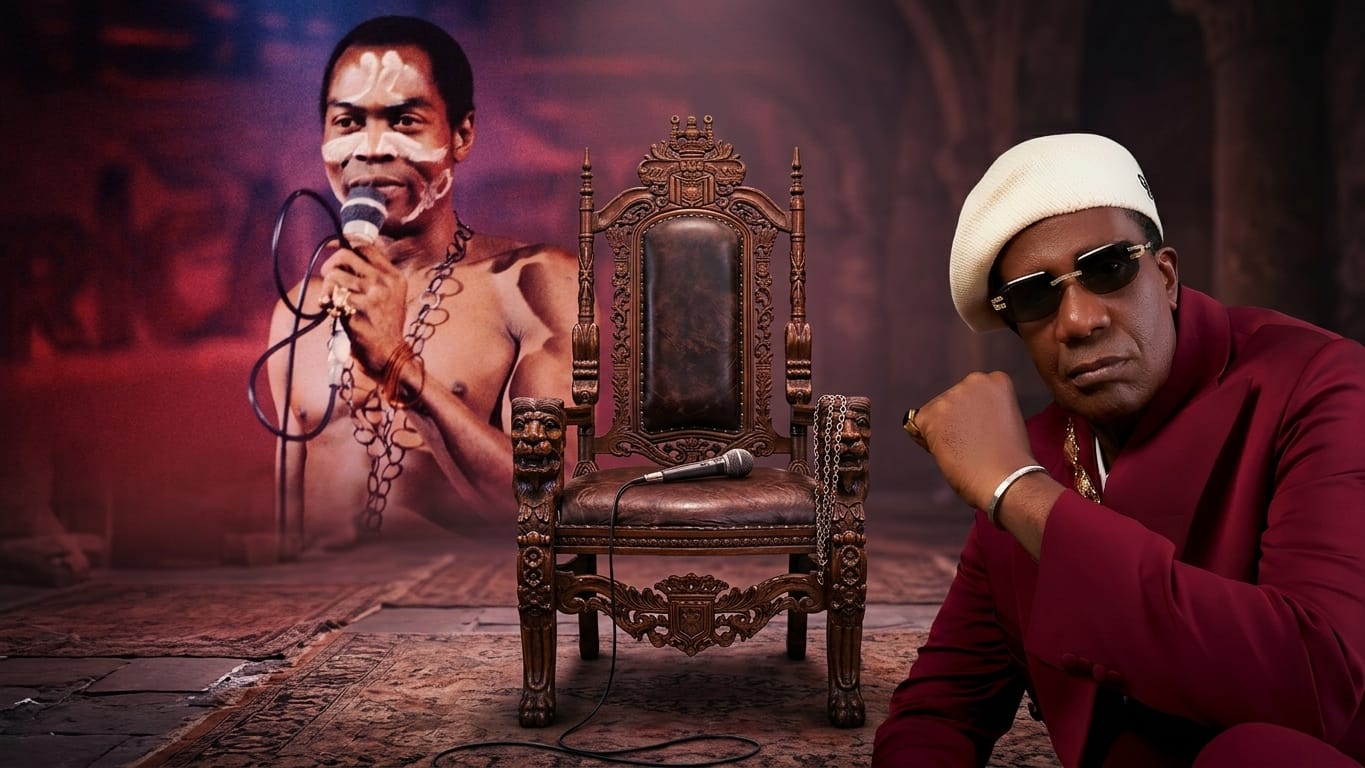
Keji Hamilton and the Empty Throne of Fela Kuti’s Afrobeat
Keji Hamilton’s “Agbaya People” is a rare thing — a genuine attempt at Fela Kuti’s actual sound in an era that samples his catalogue endlessly but rarely plays it.
Words by
James Melbin
Published
Sat, 13 June 2026
Reading time
4 minutes
There is a particular kind of loneliness in being right. Keji Hamilton has been playing the real stuff, the Fela kind of Afrobeat, for most of his life. He played guitar in Fela Anikulapo-Kuti’s legendary band Egypt 80, touring the United States, France, Germany, Italy, the Netherlands, carrying a sound the world called revolutionary. Now, in 2026, he’s dropped “Agbaya People,” a single that blends live instrumentation, tight percussion, horn arrangements and the observational social commentary that was always the backbone of Afrobeat. It’s a confident record. It is also an almost eccentric act by the logic of contemporary music.
The thing about Fela Kuti’s sound is that it’s one of the most sampled catalogues in African music history, and one of the least actually played.
That distinction is not a trivial one. In a specific and uncomfortable way, sampling Fela is the opposite of honouring him. His whole aesthetic was based on the other impulse — the communal labour of a full live ensemble, the physical presence of bodies in a room making noise together, the political act of a 20-piece band locked into a groove for thirty minutes while the singer called out the government by name. And take two bars of that and build a modern Afrobeats track – that’s like taking the furniture out of the house and calling it architecture. The groove remains. All the things that made the groove mean anything don’t.
This is what happens when artists try to claim Fela’s legacy. Femi Kuti has long been quick to point out the stark difference between the music his father played and the modern genre now known as afrobeats. That difference is more meaningful than the Nigerian music industry usually admits. What Burna Boy is borrowing when he calls himself “African Giant”, what Bella Shmurda is borrowing when he drops a song literally titled “New Born Fela”, what artists are borrowing when they name-drop Fela in press releases is an image — the myth of the rebel, the costume of resistance, and sometimes, a loop. The music? That’s a different conversation.
Because Fela’s real sound is one of the most demanding propositions in the history of African music. He played several nights a week, often stretching sets into marathon sessions of music, dance and political oratory, stopping in the middle of a song to criticise government policies or denounce state violence. The form he built — the extended suites, the call-and-response between saxophone and chorus, the polyrhythmic drums anchored by Tony Allen, the horn stabs that felt like arguments — was not a genre you entered lightly. Most genres of music have a living line. There are schools for jazz. The Blues had regional styles. Over the decades Funk found new apostles. Reverence in abundance it seems. Genuine reproduction almost nowhere. Afrobeat. Fela’s Afrobeat specifically.
Part of this is to do with the structure. Afrobeat songs usually feature a band that sounds like an orchestra, not unlike James Brown’s JBs or Parliament-Funkadelic. In a world where a bedroom producer can churn out a hit with a laptop and a single vocal feature, hiring a full live ensemble is a financial and organisational commitment that most artists simply aren’t going to make. The economics of streaming is based on short. The economics of touring favour spectacle. It doesn’t reward the slow, locked-in groove of a 20-minute Afrobeat cut where the politics arrive in the third verse and the horn section is doing something that took rehearsal.
There are some notable exceptions. Brooklyn’s Antibalas and Zongo Junction are contemporary artists who have built careers with real rigour and respect around the Afrobeat sound. Great bands. But they are Americans. They came to Afrobeat as scholars come to a text, with love and discipline, but from outside. On the African continent itself, the musicians most able to credibly carry the form — those who actually played it, who lived inside the sound — have largely either moved on commercially or kept the tradition alive on smaller stages with little mainstream attention. Even the most visible custodians, the Kuti sons, Femi and Seun, have not evolved their sounds considerably. They are heirs by blood and craft; but it is not inheritance.
That’s why you must watch Keji Hamilton’s “Agbaya People”. For more than ten years Hamilton toured extensively with Egypt 80 playing Afrobeat all over North America and Europe. He’s not sending a respectful tribute to Fela from afar. He’s pulling from a sound he helped keep alive and bring to the world as a working musician. “Agbaya People” has tight percussion, signature horn arrangements and the deep live instrumentation that Hamilton’s decades in Egypt 80 drilled in muscle memory. The title is a play on a street expression for those who are reckless or undisciplined – a classic Fela-era move, weaponising vernacular, making social observations from everyday life into political critique with a groove underneath it.
What “Agbaya People” stands for is more than the return of an ageing musician. It is a proof that the form still lives in one who carries it from practice, not from proximity. Fela Kuti fused highlife, jazz and funk into a revolutionary sound that defied political authority and redefined the global rhythm landscape – a legacy celebrated this year with his induction into the Rock & Roll Hall of Fame, decades after his death. The world is still trying to catch up with what he built. But catching up to his influence and catching up to his real sound are two very different ambitions. One is a position. The other needs a band, a horn section, a political nerve and years of doing the work in rooms that were not always full.
Keji Hamilton has them all. The question the rest of African music has yet to seriously ask is: who else is willing to stop sampling house and learn how to build one?
Start the conversation
Click any paragraph above to leave a comment.
Words by
James Melbin
James Melbin is a Cultural Manager, Art Critic, Anthologist/Curator, Creative Director, and Publisher with special interests in the arts, creative industries, classical and contemporary culture, and sustainability.
There is a particular kind of loneliness in being right. Keji Hamilton has been playing the real stuff, the Fela kind of Afrobeat, for most of his life. He played guitar in Fela Anikulapo-Kuti’s legendary band Egypt 80, touring the United States, France, Germany, Italy, the Netherlands, carrying a sound the world called revolutionary. Now, in 2026, he’s dropped “Agbaya People,” a single that blends live instrumentation, tight percussion, horn arrangements and the observational social commentary that was always the backbone of Afrobeat. It’s a confident record. It is also an almost eccentric act by the logic of contemporary music.
The thing about Fela Kuti’s sound is that it’s one of the most sampled catalogues in African music history, and one of the least actually played.
That distinction is not a trivial one. In a specific and uncomfortable way, sampling Fela is the opposite of honouring him. His whole aesthetic was based on the other impulse — the communal labour of a full live ensemble, the physical presence of bodies in a room making noise together, the political act of a 20-piece band locked into a groove for thirty minutes while the singer called out the government by name. And take two bars of that and build a modern Afrobeats track – that’s like taking the furniture out of the house and calling it architecture. The groove remains. All the things that made the groove mean anything don’t.
This is what happens when artists try to claim Fela’s legacy. Femi Kuti has long been quick to point out the stark difference between the music his father played and the modern genre now known as afrobeats. That difference is more meaningful than the Nigerian music industry usually admits. What Burna Boy is borrowing when he calls himself “African Giant”, what Bella Shmurda is borrowing when he drops a song literally titled “New Born Fela”, what artists are borrowing when they name-drop Fela in press releases is an image — the myth of the rebel, the costume of resistance, and sometimes, a loop. The music? That’s a different conversation.
Because Fela’s real sound is one of the most demanding propositions in the history of African music. He played several nights a week, often stretching sets into marathon sessions of music, dance and political oratory, stopping in the middle of a song to criticise government policies or denounce state violence. The form he built — the extended suites, the call-and-response between saxophone and chorus, the polyrhythmic drums anchored by Tony Allen, the horn stabs that felt like arguments — was not a genre you entered lightly. Most genres of music have a living line. There are schools for jazz. The Blues had regional styles. Over the decades Funk found new apostles. Reverence in abundance it seems. Genuine reproduction almost nowhere. Afrobeat. Fela’s Afrobeat specifically.
Part of this is to do with the structure. Afrobeat songs usually feature a band that sounds like an orchestra, not unlike James Brown’s JBs or Parliament-Funkadelic. In a world where a bedroom producer can churn out a hit with a laptop and a single vocal feature, hiring a full live ensemble is a financial and organisational commitment that most artists simply aren’t going to make. The economics of streaming is based on short. The economics of touring favour spectacle. It doesn’t reward the slow, locked-in groove of a 20-minute Afrobeat cut where the politics arrive in the third verse and the horn section is doing something that took rehearsal.
There are some notable exceptions. Brooklyn’s Antibalas and Zongo Junction are contemporary artists who have built careers with real rigour and respect around the Afrobeat sound. Great bands. But they are Americans. They came to Afrobeat as scholars come to a text, with love and discipline, but from outside. On the African continent itself, the musicians most able to credibly carry the form — those who actually played it, who lived inside the sound — have largely either moved on commercially or kept the tradition alive on smaller stages with little mainstream attention. Even the most visible custodians, the Kuti sons, Femi and Seun, have not evolved their sounds considerably. They are heirs by blood and craft; but it is not inheritance.
That’s why you must watch Keji Hamilton’s “Agbaya People”. For more than ten years Hamilton toured extensively with Egypt 80 playing Afrobeat all over North America and Europe. He’s not sending a respectful tribute to Fela from afar. He’s pulling from a sound he helped keep alive and bring to the world as a working musician. “Agbaya People” has tight percussion, signature horn arrangements and the deep live instrumentation that Hamilton’s decades in Egypt 80 drilled in muscle memory. The title is a play on a street expression for those who are reckless or undisciplined – a classic Fela-era move, weaponising vernacular, making social observations from everyday life into political critique with a groove underneath it.
What “Agbaya People” stands for is more than the return of an ageing musician. It is a proof that the form still lives in one who carries it from practice, not from proximity. Fela Kuti fused highlife, jazz and funk into a revolutionary sound that defied political authority and redefined the global rhythm landscape – a legacy celebrated this year with his induction into the Rock & Roll Hall of Fame, decades after his death. The world is still trying to catch up with what he built. But catching up to his influence and catching up to his real sound are two very different ambitions. One is a position. The other needs a band, a horn section, a political nerve and years of doing the work in rooms that were not always full.
Keji Hamilton has them all. The question the rest of African music has yet to seriously ask is: who else is willing to stop sampling house and learn how to build one?
Start the conversation
Click any paragraph above to leave a comment.