

Welcome to Owuro Every small town in Nigeria has secrets. Owuro, the fictional Ondo State municipality at the centre of Magdalene Agweven’s debut novel, is…
Every small town in Nigeria has secrets. Owuro, the fictional Ondo State municipality at the centre of Magdalene Agweven’s debut novel, is no exception. Here witches are a part of life. A surgeon saves a man’s life with Orisha incantations when medicine can’t reach the shrapnel in his ribs, then sews the wound shut before her colleagues can ask questions. A 16-year-old girl is locked in chains under a church altar because the parish reverend thinks her newfound magic makes her worthy of death. Owuro has roads and functioning drainage. The Parent-Teacher Association is active. The town hall has a registry of witches.
At first glance Where Secrets Live might seem like other fantasy novels. It’s not. Agweven’s writing combines a sprawling town novel in the Stephen King tradition with a full-blooded Nollywood epic. The specific kind where the camera holds on a child’s face at the prayer mountain two beats longer than you’re comfortable with. The story cycles through seventeen chapters and nearly a dozen first-person narrators: Tobi, a grieving teenage poet; Julius, a Bible-quoting witch-hunter; Dr. Jade Wright, a surgeon who heals with magic when medicine runs out. The ambition is enormous. The execution is uneven. The book is alive in a way that makes you forgive the unevenness anyway.
Agweven is young enough to speak her characters’ language without trying. The code-switching, the Instagram DMs, “Bro it’s gon’ be lit” landing two pages before an invocation in Old Ondo Yoruba. This is not a novel embarrassed by its YA instincts. It talks the way its teenagers talk and follows through without looking over its shoulder.
The engine here is polyphonic: chapters named for characters, each told in the first person, each voice responsible for lighting up a different part of Owuro’s layered life.
The main character Tobi is grieving for his mother, who died in a car accident on the very night of his first date. He’s ambidextrous, writes poetry, keeps a journal. His feelings for his ex-girlfriend Lola simply vanished after the crash, like someone reached inside him and turned off a switch. His story is emotional and specific. Agweven is good at the texture of Nigerian secondary school: the uniform details (white shirt, grey tie, ash-green tartan trousers), the principal everyone dreads, the boy whose shirt is already tight across the biceps at 7am, the couple the whole school is shipping.
Then there’s Dada, whose chapter is intense. He sneaks out to a party during a sacred masquerade curfew against his father’s explicit instructions, goes looking for a painting he made for his girlfriend, and the Ojuju masquerades find him instead. The scene is brutal and genuinely scary. Bound at the ankles, a heavy iron cauldron forced down onto his skull, a mask of animal skin pressed to his face, incantations circling him. Agweven writes physical pain with real precision. When Kenny arrives and attacks the masquerades with her mind, a power she has no name for, the novel crosses into territory it cannot come back from. And doesn’t try to.
Kenny’s chapter is quieter. Hits harder. She wakes up with a hangover, calls Dada to check he’s alive, and then finds her mother Dr. Jade Wright standing in her bedroom doorway holding a grimoire. The face Jade is wearing is the one Kenny remembers from the morning she told them their father was never coming home. What follows: the levitating pillow, the daughter’s denial, the tears, and then the question “Was that why Dad left?” is the emotional centre of the entire novel. Two women in a room with a truth that has been sitting in the house for seventeen years. Then Taiye appears in the doorway, having heard everything. The chapter closes on two words you already know.
Nobody in this book unsettles you like Reverend Julius Bose. Not because he’s cartoonishly evil. Because he isn’t. He’s a witch-hunter. Adopted son of a Celestial Church pastor in Benin Republic. Raised on the idea that supernatural evil is real and someone has to stop it. His chapter is the book’s biggest risk: Agweven just hands him the mic and lets him talk. And he makes sense. That’s the problem. Julius thinks he’s saving Owuro. When he kidnaps Cynthia it’s not kidnapping in his head, it’s God’s will. He beats his adopted son Emmanuel with a turning stick and comes back later with prayers and a glass of water. Abuse and tenderness, over and over, until Emmanuel can’t tell the difference anymore.
If you’ve ever seen a child pinned to a church floor while a pastor screams deliverance at them, you’ll know exactly where Julius comes from. He’s not fiction, really. He just has a name here. Silver bullets, witch-hazel oil, and the kind of certainty that doesn’t leave room for questions. What Agweven does that’s brave is she won’t let you dismiss him completely. In the world of this novel the witches are actually real. So Julius isn’t wrong about that part. He’s just catastrophically wrong about what it means.
Which raises the question the book never fully answers. Are the witches of Owuro good? Mostly yes. Dr. Jade uses her powers to save lives. But she also kept the truth from her daughter for seventeen years. That same secrecy is what ended her marriage, left Kenny frightened and confused through her whole adolescence, and left Cynthia, a newly initiated sixteen-year-old, completely exposed to the one man in Owuro who hunts people like her. The secrecy protects the witches from the world. It also, quietly, destroys them from inside.
Seventeen chapters, nearly a dozen narrators. It’s a lot. The world-building especially drags in places. Four covens, the Orishas, silver as witch’s bane, witch-hazel in every form: it piles up in big expository blocks, delivered by characters who have no logical reason to be explaining things they’ve known their whole lives. Dr. Jade’s chapter is the worst offender. Opens brilliantly, flattens into a lecture. Saheed and Sandra each get their own chapters and feel like the same person split across two bodies. Decent detectives, corrupt system, not much else to separate them. You could cut both chapters in half and lose nothing.
The dialogue saves it though. Every time. The characters sound like teenagers from Nigeria, specifically. When Nathan pokes Tobi with a pen and says “Omo guy I hear say you and Lola don breakup. You really lose guard, oh,” you are sitting right behind them. You can see the sweat patches. When Ty walks up to Dada and starts a fight over a masquerade curfew, the charge in the scene is not just teenage bravado. It’s a boy whose father left, picking a fight because he doesn’t know how to say he’s afraid.
Lola is really special. Her voice can shatter a glass of whiskey clean in someone’s hand. It makes the lights flicker in a mansion. She has a gift that might be more than a gift. When she performs at Jerry’s party it’s like something out of a movie. But we don’t get nearly enough of her. She only gets one chapter, and it’s more about how she makes Tobi feel guilty than about her own story and her own relationship to whatever is living in her voice.
Shina Murphy is another character who deserved more room. He’s the District Attorney of Owuro and also a witch. He calls Julius in the novel’s final act from a private number and offers him a deal. Shina is really smart. Always comes out on top. Slippery, self-preserving, perpetually on the winning side of every argument. He should get his own book. Maybe he will.
What makes Where Secrets Live good is that it feels real. Agweven genuinely cares about the characters. She cares about Dada’s terror under the cauldron. She cares about Kenny crying in a bedroom. She cares about Emmanuel, the albino boy adopted by a psychopath, who discovers that the girl chained in the crypt beneath the altar is more human than the man who raised him. She even feels something for Julius. Not forgiveness. Understanding. Of how a boy shuttled between barracks, abandoned to an orphanage, shaped by a charismatic pastor, might emerge as a zealot who has confused his rage for righteousness.
The final chapter is where everything tightens. Julius murders the town secretary, throws her from a window into the rain, and steals the witch registry from the town hall archives. Then he finds the list of names. The last entry under the Irawo coven, written in fresh ink: Kehinde Wright. He entered the story as a parish priest. He exits it as someone with an enemies list and the theological certainty to use every name on it. The book doesn’t end with everything fixed. It ends with the hunter holding the map.
Where Secrets Live is about what we inherit from our parents and their parents before them. Magic, silence, trauma, faith, violence: all of it passed down, all of it hidden in plain sight. Agweven has built a whole world here but sometimes it’s a bit too much. The book is long. It’s hard to put down. There’s definitely going to be a sequel.
I’m watching this writer. She’s not perfect yet. There are moments she reaches for the encyclopaedia when she should trust the scene. But she has great instincts, feels strongly about her characters, and the emotional register is mature beyond what you expect from a debut. When she gets better at leaving some things unsaid she’ll write something formidable. For now she’s written a book that is really honest. The most dangerous secret a family can keep is the one they keep out of love.
Magdalene Agweven’s Where Secrets Live is published by Witsprouts Zintle, an imprint of Witsprouts Global Ltd.
Free · Weekly · Unsubscribe any time
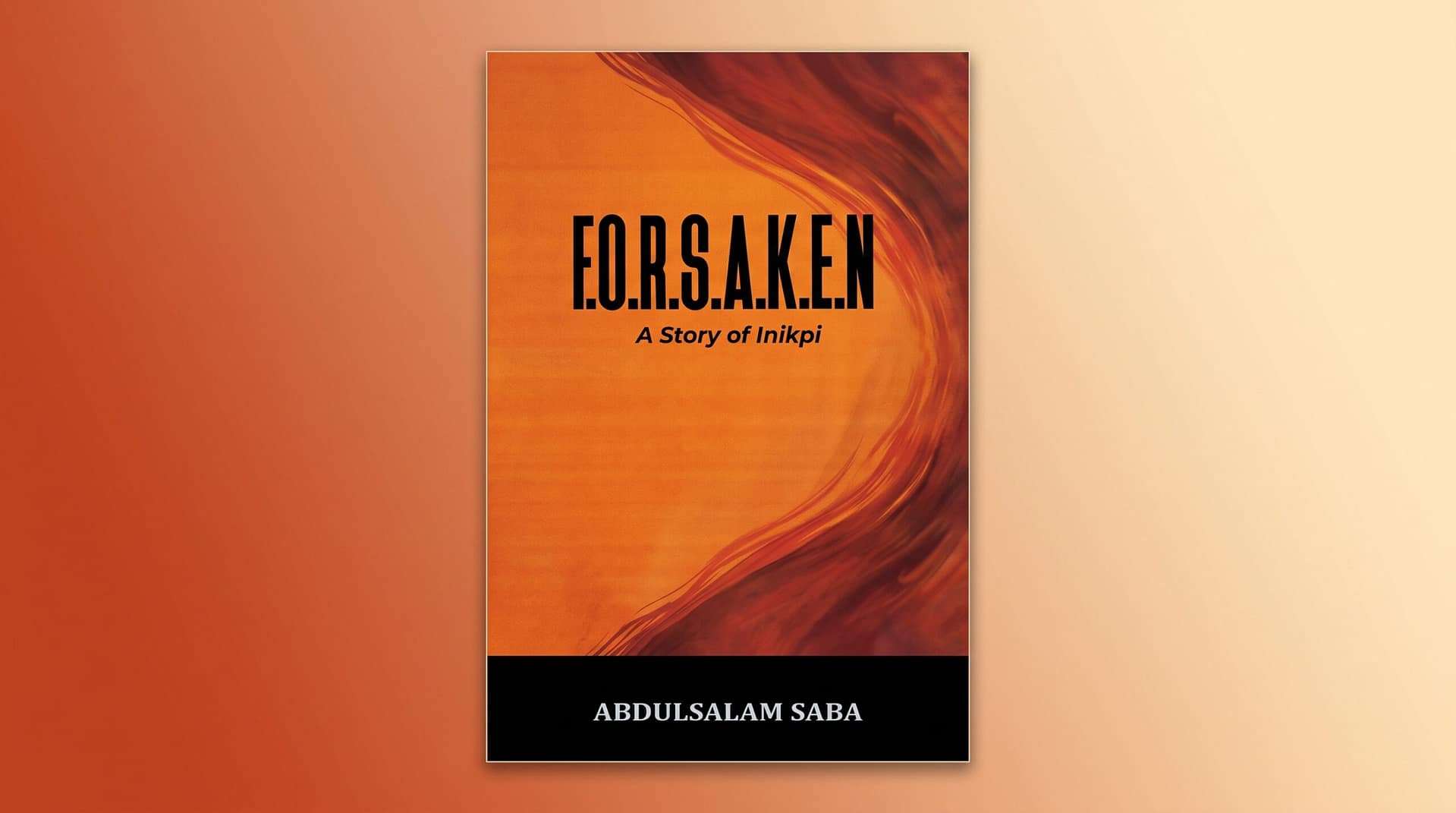
F.O.R.S.A.K.E.N review: Abdulsalam Saba’s Exploration of Silence and Missed Chances



Comments
Sign in to leave a comment.
No comments yet. Be the first to share your thoughts.